
Most online ordering is built to remove every pause between "I want this" and "paid". But some businesses sell things that need a professional to look first. A pharmacy has to check a prescription. An installer may need to confirm a site survey. A lender, a clinic or a print shop may need someone to approve the job before money changes hands.
If that describes your business, the question is a fair one: can we take orders online without losing the check that keeps us safe and legal? And will customers put up with a pause in the middle of the process?
PharmAssyst, a digital pharmacy in Ghana that we designed and built, is a useful answer. Patients ask for their medication online, a pharmacist verifies every request, and the order is then paid for and delivered to their door. Here is how that flow is put together, and what we would plan for in any order that needs an expert in the middle.
Make the review step part of the journey, not an obstacle
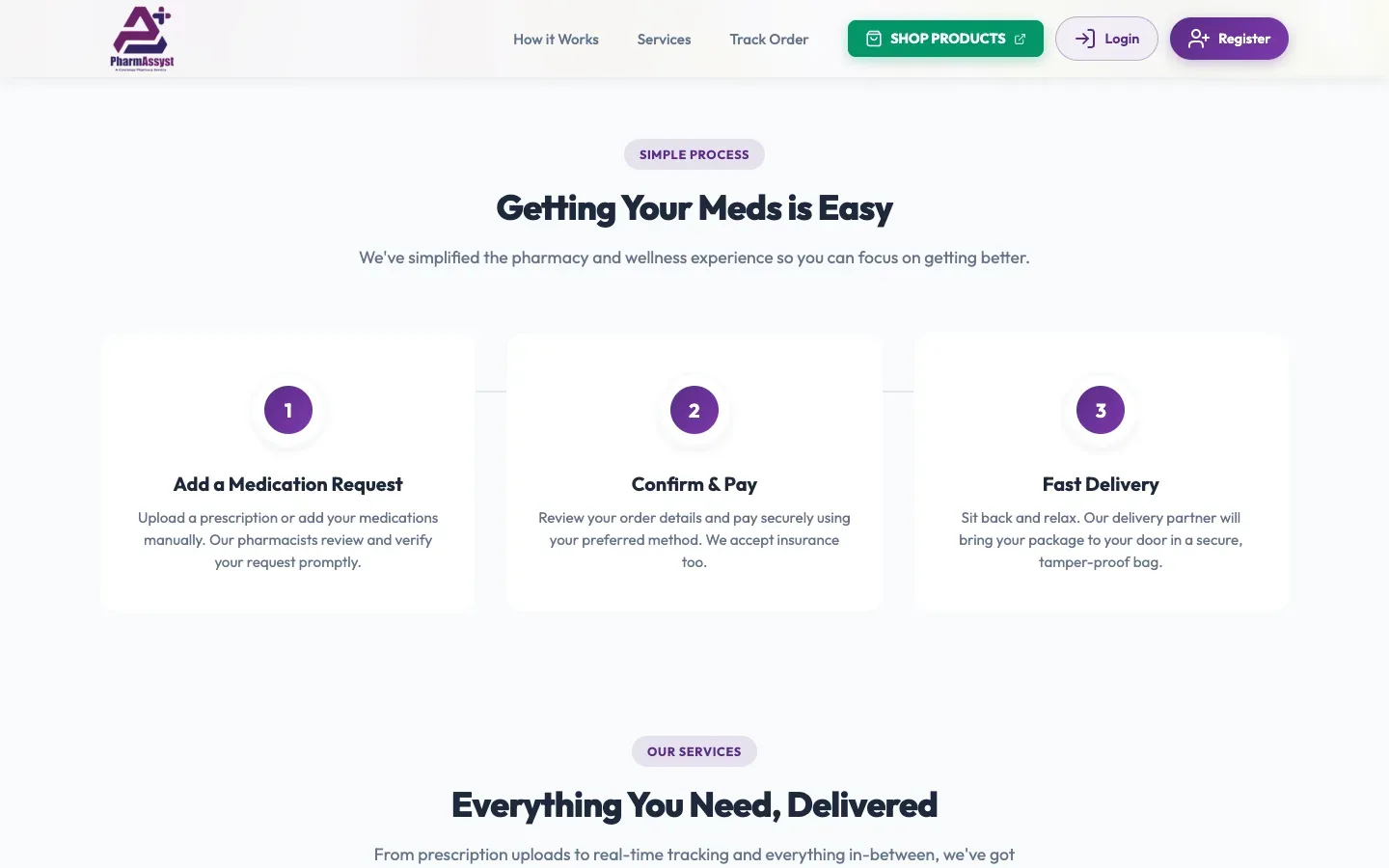
PharmAssyst describes the whole service in three steps: add a medication request, confirm and pay, and wait for delivery. The pharmacist's review sits inside that journey. Each request is reviewed and verified by a pharmacist before the patient confirms and pays, so no order goes out without a professional check.
That order matters. The patient is never asked to pay for something that might not be approved, and the pharmacist is never asked to approve something that has already been sold. The regulated step is not a surprise halfway through checkout; it is simply step one of a short, clearly explained process.
What to take from this: write your process as three or four plain steps, and put the review exactly where it belongs. If customers can see the steps before they start, a pause feels like part of the service rather than a delay.
Let people ask the way that suits them
A prescription is not a product page with an "add to cart" button. Some patients have a paper prescription; others know the names of their regular medicines. PharmAssyst accepts both: patients can upload a prescription or type their medications in by hand.
Two ways to ask is a small detail with a large effect. It means nobody is turned away because they do not have a scanner, and nobody with a long-standing repeat order is forced to dig out old paperwork.
What to take from this: list the forms your customers' requests already arrive in (a photo, a document, a phone call, a list) and let the online form accept the most common ones. The expert reviewing it can deal with the variety; the customer should not have to.
Keep a person within reach
Some people in Ghana want to speak to a person before they pay. Medication is personal, and many patients are unwell or elderly and ordering on a phone. So PharmAssyst puts call and WhatsApp buttons on the site, which keep the pharmacy's experts one tap away.
This is not a fallback for when the website fails. It is part of the design. An online flow with an expert in it should make that expert easy to reach, because the reason the customer trusts you is the person behind the screen.
What to take from this: decide which questions you want customers to ask a person, and put the quickest route to that person (often WhatsApp or a phone call) next to the step where those questions come up.
Pay the way people actually pay
Payment comes after the review, and it has to fit how patients actually buy. On PharmAssyst, patients pay by their preferred method, and insurance is accepted. Wellness products are sold through a linked Paystack storefront, and one account holds both medication requests and wellness purchases.
That split is worth copying. In general, a customer buying something simple should not have to pass through a review step designed for something that needs one, and the reviewer's queue should only hold the requests that need their attention.
What to take from this: split what needs a review from what does not, and give each the simplest path it can have. One account that holds both keeps life easy for the customer.
Trust is built in the details
Patients are trusting a new service with their health information. On PharmAssyst, health data is encrypted and handled under strict privacy guidelines. Sign-up and sign-in are protected against bots with Cloudflare Turnstile. Every request is kept in the patient's account, so repeat requests are easy to find. And the order itself arrives in a secure, tamper-proof bag, with same-day delivery by a delivery partner.
None of these is a headline feature. Together they answer the quiet questions a careful customer asks: who can see my information, is this a real service, and will what arrives be what I ordered?
What to take from this: write down the worries a careful customer would have about your service, then check that each one is answered somewhere in the flow, from sign-up to the moment the order arrives.
Tell people where their order is
Once an expert is involved, an order takes longer than a normal checkout, and that makes silence more costly. PharmAssyst gives patients order status tracking until their medication arrives. The pages are also light and mobile first, so following an order works on a phone over mobile data.
What to take from this: we would make every stage after "submitted" (under review, approved, paid, on its way, delivered) visible to the customer without them having to call.
Planning your own review-before-payment flow
If your business needs an expert in the middle of an online order, these are the questions we would want answered before any design work starts:
- Who reviews, and what are they checking? Write it down as a checklist the reviewer will work from.
- What can the customer send? Photos, documents, typed lists, or a mix.
- What happens when the answer is no, or "not quite"? Plan for a request that needs changing, not only for approval.
- Where does payment sit? After the review, if the customer should never pay for something that might be refused.
- How does the customer reach a person? Phone, WhatsApp or chat, placed where the questions arise.
- What does the customer see while they wait? A clear status at every stage.
We work through questions like these in discovery, then write a fixed-price scope and timeline before the build starts. During the build you see working software on a staging site every week, so the people who will do the reviewing can try the flow long before launch.
Talk to us
If your orders need a professional check and you want to take them online without losing it, tell us about your process. Read the full PharmAssyst case study, or see how we approach custom web applications and websites.